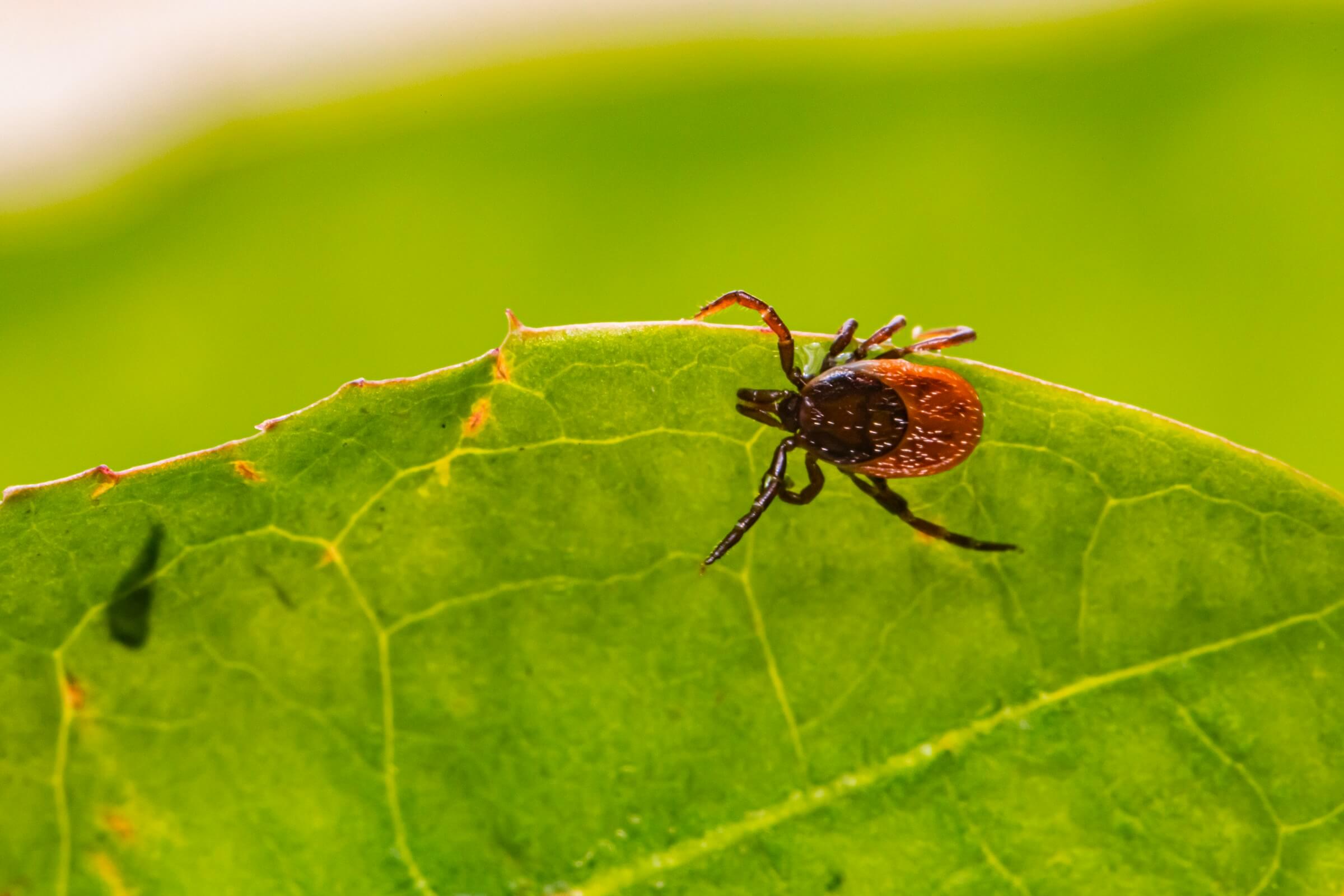
If you spend any time outdoors in North Carolina, whether that’s hiking the greenways around Raleigh, gardening, walking your dog, or just being in your backyard, tick season is something you need to take seriously. May through July is peak season for blacklegged ticks, also called deer ticks, which are the primary carriers of Lyme disease in the eastern United States. And North Carolina sits squarely in the range where tick-borne illness is a real and growing concern.
Lyme disease is the most commonly reported vector-borne illness in the country, with the CDC estimating around 476,000 cases diagnosed and treated in the US each year. Many more go undiagnosed. It’s also one of the most misunderstood and, in its later stages, one of the most debilitating conditions I see patients dealing with. The good news is that when it’s caught early, it’s very treatable. The bad news is that a lot of people miss the window.
This post covers everything you need to know: how to prevent tick bites, what to do if you find one, how to recognize Lyme early, what happens if it goes untreated, the co-infections that often come with it, and an honest look at the chronic Lyme controversy.
Prevention First
The best outcome is never getting bitten in the first place. Ticks don’t jump or fly. They wait on grass and low vegetation and latch on when you brush past. They tend to prefer warm, moist areas of the body, so waistbands, armpits, the back of the knees, the scalp, and behind the ears are where you’ll most often find them after being outdoors.
Natural Prevention Options
If you prefer to avoid conventional chemical repellents, there are some genuinely effective natural options. Oil of lemon eucalyptus has solid evidence behind it and is CDC-recognized as effective against ticks. Rose geranium essential oil applied to skin and clothing is widely used and has shown repellent properties in studies. Neem oil is another option. Cedar oil-based sprays like Wondercide are popular for treating clothing, gear, and even the yard perimeter. Wearing light-colored clothing makes ticks easier to spot, and tucking pants into socks when walking in wooded or grassy areas dramatically reduces exposure.
Conventional Prevention Options
DEET is the most widely studied chemical repellent and is effective, but it comes with real caveats worth knowing. High concentrations and frequent use have been associated with skin irritation, and some studies have raised concerns about neurological effects with excessive exposure, particularly in children. It should never be applied to broken skin, near the eyes or mouth, or on children’s hands. If you do use it, lower concentrations around 20-30% are sufficient and reduce exposure. Permethrin is a better option for treating clothing and gear since it’s applied to fabric rather than skin, kills ticks on contact, and remains effective through multiple washes. If you want chemical protection without applying DEET directly to your skin, permethrin-treated clothing paired with a natural repellent on exposed skin is a reasonable middle ground.
After Being Outdoors
Do a full body tick check every time you come in from outdoors during tick season. Shower within two hours if possible. Toss your clothes in the dryer on high heat for ten minutes, which kills ticks that may be on the fabric. Check pets too, since they can carry ticks inside even if the ticks don’t bite them.
If You Find a Tick
Stay calm. Not every tick bite transmits Lyme, and the literature often cites 36 to 48 hours of attachment as the threshold for transmission. In my clinical experience, that’s not a reliable rule. I’ve seen Lyme in patients who had no idea a tick had been attached that long, and nymph ticks are so small they’re easy to miss entirely. Remove the tick as quickly as possible regardless, and monitor for symptoms no matter how briefly it appeared to be attached.
Do not use petroleum jelly, nail polish, heat, or any other folk remedy to remove a tick. These methods can cause the tick to regurgitate into the bite, increasing transmission risk.
Use fine-tipped tweezers or a tick removal tool. Grasp the tick as close to the skin surface as possible and pull upward with steady, even pressure. Don’t twist or jerk. After removal, clean the bite area with rubbing alcohol or soap and water. Save the tick in a sealed bag or container if possible, as some labs can test it for pathogens.
Note the date you found it and where on your body it was attached. Monitor the bite site and your symptoms for the next 30 days.
Recognizing Lyme: Early Symptoms
Early detection is everything with Lyme disease. Caught in the first few weeks, it responds well to treatment and most people recover fully. Missed, it can progress to something much harder to treat.
Stage 1: Early Localized (Days 3-30 After Bite)
The hallmark sign is the erythema migrans rash, commonly described as a bull’s-eye rash. It starts at the bite site and expands outward, often with a clear center and a red outer ring, though it can also appear as a solid red expanding patch without the bull’s-eye pattern. It’s typically not itchy or painful, which is part of why people miss it. It appears in 70-80% of people with Lyme, which means up to 30% never get the rash at all.
Other early symptoms include fatigue, fever, chills, headache, muscle and joint aches, and swollen lymph nodes. It can feel a lot like the flu, which is another reason it gets missed or attributed to something else.
You do not need to wait for a bull’s-eye rash to seek treatment. If you’ve had a tick bite and develop flu-like symptoms within a month, come in. Early treatment is far more effective than waiting for confirmation.
Stage 2: Early Disseminated (Weeks to Months After Bite)
If Lyme goes untreated, the bacteria spreads through the body. This stage can involve multiple rashes appearing at different sites, facial palsy (drooping on one or both sides of the face), severe headaches and neck stiffness, heart palpitations or an irregular heartbeat, shooting pain, numbness or tingling in the hands or feet, and dizziness. These symptoms indicate the infection has moved beyond the skin and into other systems.
Stage 3: Late Disseminated (Months to Years After Bite)
Untreated Lyme in the late stage most commonly causes Lyme arthritis, particularly in the knees, with significant swelling and pain. Neurological symptoms can persist or worsen, including cognitive difficulties, memory problems, and mood changes. This stage is significantly harder to treat and recovery is less predictable.
Co-Infections: The Part Most People Don’t Know About
This is where Lyme disease gets more complicated and where a lot of patients fall through the cracks. Ticks that carry Lyme often carry other pathogens at the same time, and a single bite can transmit more than one infection. The most common co-infections in North Carolina are anaplasmosis and ehrlichiosis, both caused by bacteria transmitted by the same blacklegged tick that carries Lyme.
Anaplasmosis and ehrlichiosis can both cause fever, headache, muscle aches, and fatigue, symptoms that overlap heavily with Lyme. They can also cause low white blood cell counts and elevated liver enzymes. Both respond to doxycycline, the same antibiotic used for early Lyme, but they need to be on the radar when evaluating a tick bite. If someone is being treated for Lyme but isn’t improving as expected, a co-infection may be part of the picture.
Rocky Mountain spotted fever, despite the name, is also present in North Carolina and is transmitted by the American dog tick rather than the blacklegged tick. It’s less common but more serious and can be life-threatening if not treated quickly. It causes fever, headache, and a distinctive spotted rash that typically starts on the wrists and ankles.
This is one reason why a tick bite that’s causing symptoms deserves a proper evaluation rather than a quick Google search. The treatment may be the same but knowing what you’re dealing with matters.
The Chronic Lyme Controversy
I want to address this directly because it’s something a lot of patients bring up and the mainstream medical response to it has not always been adequate.
Some people who are treated for Lyme disease continue to have symptoms for months or years afterward: fatigue, joint pain, cognitive difficulties, sleep problems, and a general sense of not being well. This is real. It happens. The question of what to call it and how to treat it is where the controversy lies.
The official medical establishment calls this Post-Treatment Lyme Disease Syndrome (PTLDS) and the current consensus is that it’s not caused by persistent active infection but rather by immune dysregulation or residual damage from the original infection. Extended antibiotic therapy has not shown consistent benefit in clinical trials and carries real risks.
The Lyme-literate medicine community, on the other hand, argues that standard testing misses a significant number of cases, that persistent infection is underrecognized, and that some patients do improve with extended treatment. The standard two-tier testing used by most labs, the ELISA followed by a Western blot, has known sensitivity limitations, particularly in early infection and in certain patient populations.
My take: the truth is probably somewhere in the middle, and dismissing patients who are genuinely suffering because their labs look normal is not good medicine. If you’ve been treated for Lyme and still don’t feel right, that deserves a thorough workup and an open mind, not a shrug. This is the kind of situation where a DPC practice, with time to actually dig into your history and think through what’s going on, can make a real difference.
Natural and Integrative Support
Regardless of whether you’re dealing with acute Lyme or post-treatment symptoms, there are integrative approaches worth knowing about alongside conventional treatment.
Cat’s claw (Uncaria tomentosa) is an herb with well-documented antimicrobial and anti-inflammatory properties and is one of the most studied botanicals in the context of Lyme disease. Japanese knotweed (resveratrol source) has shown activity against Borrelia, the bacteria that causes Lyme, in laboratory research. These are not replacements for antibiotics in acute infection, but they may be useful as adjuncts or for supporting recovery.
Supporting the immune system matters throughout. Vitamin C, vitamin D, zinc, and magnesium are all worth optimizing, but I want to be clear about something: please don’t go out and buy a stack of supplements without talking to a provider first. Taking supplements for deficiencies you don’t actually have can cause real harm. Too much zinc can suppress copper levels. Excess vitamin D can cause toxicity. More is not always better, and the right approach depends on what your labs actually show. The goal is to address what’s genuinely deficient in your specific case, not to take everything that sounds helpful. Reducing inflammatory foods, prioritizing sleep, and managing stress are things everyone can do without a lab order, and they matter. Probiotics are also generally appropriate during and after any antibiotic course to support gut microbiome recovery, though the strain and timing matter there too.
For people dealing with ongoing symptoms after treatment, addressing inflammation, supporting mitochondrial function, and working on nervous system regulation can all be part of a meaningful recovery approach. This is an area where integrative care really shines.
When to Come In
Reach out if:
- You find a tick that appears to have been attached for more than 24 hours
- You develop any rash at or near a tick bite site
- You develop flu-like symptoms within 30 days of a known or possible tick bite
- You have facial drooping, heart palpitations, significant joint swelling, or neurological symptoms after a tick bite
- You’ve been treated for Lyme and still don’t feel right
Don’t wait for a bull’s-eye rash. Don’t wait until symptoms are severe. Lyme disease is one of those conditions where the timing of treatment genuinely changes the outcome, and early intervention is almost always the right call.