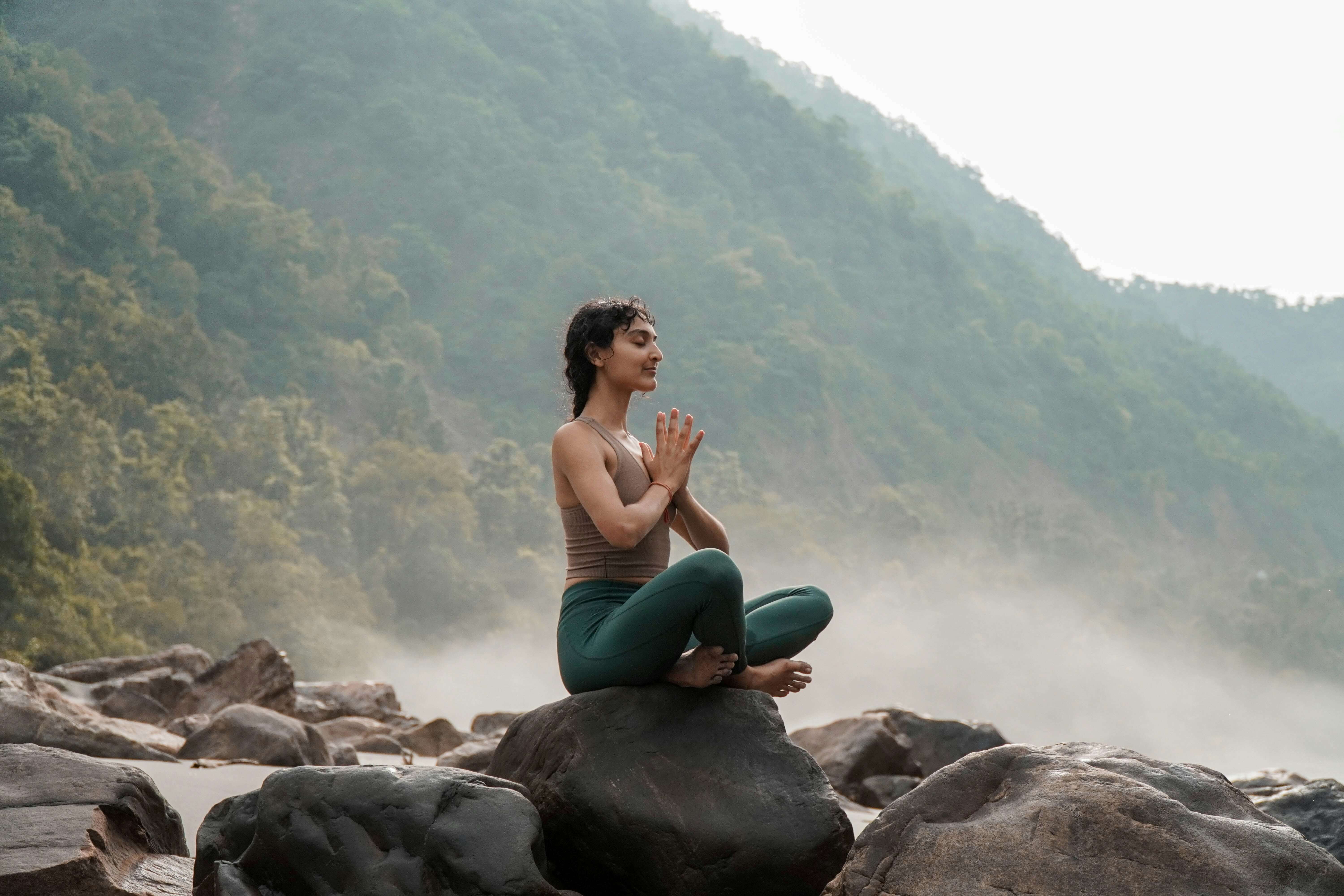
This one is a little different. I'm stepping away from labs and membership plans for a minute because I think there's a dimension of health that almost never comes up in a clinical setting, and it probably should. Spiritual health. Not in a religious prescription kind of way. Just in a "this is a real part of being human and it matters" kind of way.
I'll be upfront that I have my own relationship with spirituality, and this post isn't about that. What I'm interested in here is the bigger picture: what the research actually says about spiritual wellbeing and physical health, why December specifically is a time humans across every culture have always treated as sacred, and what we might learn from the traditions that predate the ones most of us grew up with.
Whatever you believe or don't believe, I think there's something here worth sitting with.
The Season Itself
Before we get into traditions and theology, it's worth starting with something purely physical: the light is leaving. The winter solstice, which falls around December 21st in the Northern Hemisphere, is the shortest day and longest night of the year. After that, the light starts coming back.
For ancient peoples living close to the natural world, this was not a small thing. It was the turning point. The moment when the dying of the light reversed, when the sun began its return, when survival through winter started to feel possible again. Virtually every ancient culture on earth developed rituals, feasts, fires, and ceremonies around this moment. Stonehenge, Newgrange in Ireland, and countless other megalithic structures were built to align precisely with the solstice sunrise or sunset. These were civilizations organizing their entire sacred calendar around the movement of the sun.
That impulse, to mark the darkness, to gather around light, to hold community together through the hardest part of the year, turns out to be close to a universal human instinct. And it didn't go away when religious traditions came along. It got woven into them.
What Spiritual Health Actually Means
When I talk about spiritual health, I'm not talking about religion specifically, though for many people that's a central part of it. I'm talking about a sense of connection to something larger than yourself, a framework for meaning, a feeling of belonging, and a relationship with the world around you that goes beyond the purely transactional.
Research consistently shows that people who have a strong sense of spiritual or existential wellbeing tend to have better mental health outcomes, lower rates of depression and anxiety, stronger immune function, better cardiovascular health, and even longer lives. Some of that is explained by community and social connection. Some of it is the stress-buffering effect of having a coherent worldview. And some of it is genuinely harder to explain, which I find interesting rather than unsettling.
Spiritual health isn't a soft, feel-good add-on. It's a real pillar of wellbeing that the medical system largely ignores. And December, with its short days and long nights, has a way of making the need for it more visible. That's not an accident. It's why human beings across every culture have always treated this time of year as an invitation to slow down, look inward, and tend to the invisible things.
Understanding where our traditions come from helps explain why that impulse runs so deep.
Yule and the Norse Tradition
In Norse and Germanic traditions, the winter solstice was celebrated as Yule, a festival that ran for twelve days. Families would bring a large log, the Yule log, indoors and burn it slowly over those twelve days as a symbol of light returning to the world. Evergreen branches, holly, and mistletoe were brought inside as symbols of life persisting through the darkness. Feasts were held, gifts were exchanged, and communities gathered around fire and food.
A lot of what we now associate with Christmas, the decorated tree, the Yule log, the twelve days, holly and mistletoe, has roots in these pre-Christian Norse and Germanic celebrations. When Christianity spread through northern Europe, many of these traditions were absorbed and reframed rather than discarded, which is why they feel so familiar today even though their origins are much older.
Christmas and the Christian Tradition
Christmas, as most people know it, celebrates the birth of Jesus Christ. What's less commonly known is that December 25th was not the original date of the celebration, and the exact date of Jesus's birth is not recorded in the Bible. The placement of Christmas in late December was formalized in the 4th century, likely in part to align with existing Roman winter festivals including Saturnalia and Sol Invictus, a celebration of the "unconquered sun" that fell on December 25th.
This kind of layering, where a new religious tradition absorbs and reframes the timing and imagery of older ones, is not unique to Christianity. It's a pattern that appears across religious history, and it speaks to something universal about what this time of year meant to human beings across cultures: darkness, light, death, renewal, community, and hope.
The reasons early Christianity adopted and reframed existing pagan traditions were both practical and pastoral. Practically, when Christianity spread through cultures that already had deep, centuries-old seasonal rituals, wholesale elimination of those traditions was nearly impossible. People were attached to them in ways that were cultural and communal, not just religious. The Roman Catholic Church, particularly as it expanded through Europe in the early medieval period, often found it more effective to Christianize existing celebrations than to eradicate them entirely. Pope Gregory I famously instructed missionaries in the 6th century to repurpose pagan temples and festivals rather than destroy them, reasoning that people are more likely to embrace a new faith when familiar elements are preserved.
But it would be incomplete to present this as purely pragmatic or benign. The historical record is also clear that the Christianization of Europe involved significant coercion, cultural erasure, and in many cases outright violence. Pagan practices were systematically reframed as demonic or primitive, and those who continued them faced serious consequences. The word "pagan" itself, originally just a Latin term for rural people, became a slur used to mark those outside the faith as backward or dangerous. Sacred sites, groves, and springs that had been places of worship for generations were seized, destroyed, or converted into churches. Indigenous spiritual traditions across Europe and later in colonized parts of the world were suppressed not just through persuasion but through force, law, and cultural shame.
The strategy of absorbing familiar traditions while condemning the belief systems underneath them was, in many ways, a form of cultural control. Keep the festival, erase the meaning. Keep the imagery of the evergreen and the fire and the feast, but sever it from its roots so completely that future generations would have no memory of what it once represented. This pattern extended far beyond Europe. As Christianity spread through colonization into the Americas and Africa, indigenous spiritual traditions that had existed for thousands of years were targeted with particular intensity. Ceremonies were outlawed, sacred objects were confiscated or destroyed, spiritual leaders were imprisoned or killed, and children were removed from their communities and placed in institutions specifically designed to sever their connection to their own cultures. For many historians and indigenous spiritual practitioners, this is not ancient history. It's a wound that still has relevance today.
None of this diminishes the genuine faith and meaning that billions of Christians find in this season. Those two things can both be true at once: that Christmas holds profound and authentic spiritual significance for the people who celebrate it, and that the historical process by which it came to dominate the December calendar involved some genuinely dark chapters. Understanding that history honestly feels more respectful to everyone involved than glossing over it.
Indigenous Winter Traditions
Long before European contact, Native American and First Nations peoples across North America marked the winter season with ceremonies that were deeply tied to the land, the sky, and the community. While practices varied enormously across hundreds of distinct nations and cultures, many shared a common thread: the winter was a time for storytelling, for honoring ancestors, for ceremony, and for drawing the community inward around fire and shared ritual.
Among the Pueblo peoples of the Southwest, winter solstice ceremonies like Soyal mark the return of the sun and the beginning of a new cycle. Prayers are offered, spiritual figures called kachinas are welcomed back, and the community participates in rituals meant to bring balance and life to the coming year. For the Lakota and other Plains nations, winter was a time when the deep stories were told, stories that were considered too sacred or too powerful to share during the rest of the year. The darkness and the cold were understood as a necessary pause, a time for reflection and spiritual work rather than outward activity.
In many West and Central African traditions, the rhythms of the natural world were likewise woven into spiritual and communal life. Seasonal transitions were marked with ceremony, drumming, dance, and communal gathering. Ancestors were honored as active participants in the community, and the boundary between the physical and spiritual worlds was understood as permeable and worth tending. Many of these traditions survived the transatlantic slave trade in fragmented and transformed ways, surfacing in Afro-Caribbean and African American spiritual practices that persist today, though often stripped of their original context by generations of forced assimilation and religious suppression.
What's striking across all of these traditions is how consistent the underlying impulse is: when the natural world slows down and the light recedes, human beings gather, remember, give thanks, and tend to the invisible things. That appears to be something close to a universal human instinct, and it's one worth honoring regardless of the specific tradition it comes wrapped in.
For the roughly 2.4 billion Christians in the world today, Christmas is a deeply meaningful celebration of the incarnation, the belief that the divine entered the human world. The themes of light coming into darkness, of hope in a hard season, resonate across the theological and the secular alike.
Hanukkah and the Jewish Tradition
Hanukkah, which typically falls in late November or December based on the Hebrew lunar calendar, commemorates the rededication of the Temple in Jerusalem in the 2nd century BCE, following the Maccabean Revolt. The central miracle of the story is that a small amount of oil, enough to light the Temple menorah for only one day, burned for eight days instead.
The Festival of Lights, as it's called, is celebrated by lighting the menorah over eight nights, with one additional candle added each evening. It's a celebration of religious freedom, of a small community holding on to its identity and traditions in the face of cultural erasure, and of unexpected light in a dark time.
Like so many December traditions, the imagery is striking: light multiplying, darkness giving way, a community gathering around a shared flame. The specific theology differs, but the human experience underneath it has a lot in common with what drew ancient peoples to mark the solstice with fire and feast.
Islamic Traditions and the Lunar Calendar
Islam follows a purely lunar calendar, which means Islamic holidays move through the Gregorian calendar year and don't fall in December specifically. That said, the Islamic tradition has a rich relationship with celestial observation. The crescent moon is one of the most recognized symbols of Islam, and the beginning of each month is marked by the sighting of the new moon. Ramadan, the month of fasting and spiritual reflection, is determined by the lunar cycle, and its beginning and end are announced based on the moon's appearance.
The deeper point here is that Islamic practice, like so many traditions, weaves human spiritual life into the rhythms of the natural world. The moon, the stars, the turning of time, these are not incidental backdrops. They're integral to how meaning is marked and community is held together.
What All of This Has in Common
Across all of these traditions, separated by centuries and continents and theology, a few things keep showing up. Gathering with community. Marking the darkness. Welcoming the return of light. Slowing down. Sharing food. Telling stories. Giving. Reflecting on what matters.
That's not a coincidence. Those are human needs. And December, with its short days and long nights, has always been a natural prompt to meet them. The fact that cultures with no contact with each other arrived at the same rituals independently tells you something important: this isn't tradition for tradition's sake. It's biology. It's what we actually need during this part of the year.
Research on longevity and wellbeing consistently points to community, meaning, and a sense of belonging as among the most powerful predictors of health. These are not soft variables. They show up in the data alongside sleep, diet, and exercise. The traditions of this season, whatever form they take for you, are doing something real.
Why This Matters for Your Health
Your nervous system does not exist in a vacuum. It responds to your environment, your relationships, your sense of meaning, and your connection to something larger than the daily grind. Chronic loneliness, lack of purpose, and existential disconnection are physiologically stressful. They raise cortisol, suppress immune function, and increase cardiovascular risk in measurable ways.
The flip side is also true. People who feel connected, who have community, who engage in regular practices that give them a sense of meaning, whether that's religious observance, nature, meditation, art, or something else entirely, tend to be healthier across the board. Not because believing the right things fixes your biology, but because belonging and meaning change how your nervous system operates day to day.
The seasonal rhythm of this time of year is actually an invitation to slow down in a way that your body and mind probably need. Shorter days are a natural prompt to rest more, gather more, reflect more. Most of us fight that. We cram the holidays full of obligations and stimulation and then wonder why January feels so depleted. The traditions that humans built around this season, across every culture and religion, almost universally pointed toward the opposite: stillness, community, gratitude, and light in the darkness.
You don't have to be religious to find something valuable in that. You just have to be human.
A Few Things Worth Trying This Season
If this resonates at all, here are some genuinely low-stakes ways to lean into the season in a way that might actually serve your wellbeing.
Spend some time outside around the solstice and notice the quality of the light. There's something grounding about experiencing the astronomical event that all of these traditions were built around, even just once.
Slow a meal down. One of the most consistent things across December traditions worldwide is shared food eaten slowly with people you care about. That is genuinely good for you, physiologically and otherwise.
Limit the obligations that drain you and protect the ones that fill you. Not every tradition you inherited is one worth keeping. Give yourself permission to be selective.
If you don't have community right now, that's worth paying attention to. Loneliness is a health issue, not a personal failing. This season can make that feeling more acute, and that's information worth acting on rather than pushing through.
Whatever this season means to you, I hope it includes some genuine rest, some warmth, and at least a little light in the dark.