This one is a little different. No labs, no membership plans. Just something I think is worth knowing if you live in Raleigh or anywhere in central North Carolina.
Before this city had a name, this land had people. The Tuscarora Nation. The village that stood right here, in what is now Raleigh, was called Ka’téhra’θ (pronounced roughly "kah-TAY-hrath"). When a German explorer named John Lederer passed through in 1670, he described it as a place of great trade and commerce, the chief seat of the Tuscarora people.
Staywell Health sits on Tuscarora land. I think that’s worth saying out loud, with some actual context behind it. A land acknowledgement that’s just a sentence doesn’t mean much. So here’s some of the story.
I’m drawing from the Tuscarora Nation’s own documented history, available at tuscaroranationnc.com. I’d encourage you to go read it yourself.
Who They Are
The Tuscarora have lived in what is now eastern North Carolina for thousands of years. Their territory covered much of the Roanoke, Neuse, and Tar river basins. They weren’t a small isolated group. They were a sovereign nation with established governance, trade networks stretching hundreds of miles, and deep roots in this land.
They were also, by multiple accounts, people who welcomed the first English settlers with considerable hospitality. That hospitality was not returned in kind.
What Happened Here
English contact began in 1585. Over the next century, the pattern was familiar: settlers pushing onto Tuscarora land, colonial governments looking the other way, and the Tuscarora exhausting every peaceful option available to them. In 1710, a Tuscarora delegation traveled all the way to Pennsylvania to formally petition the colonial government to stop the North Carolina government from enslaving and killing their people. They brought eight wampum belts as diplomatic gifts, which was the formal protocol for serious inter-governmental negotiation among many Indigenous nations, the equivalent of arriving with official credentials and a written proposal. It went nowhere.
The Tuscarora War started in September 1711. It wasn’t a sudden eruption. It was the end of a very long rope.
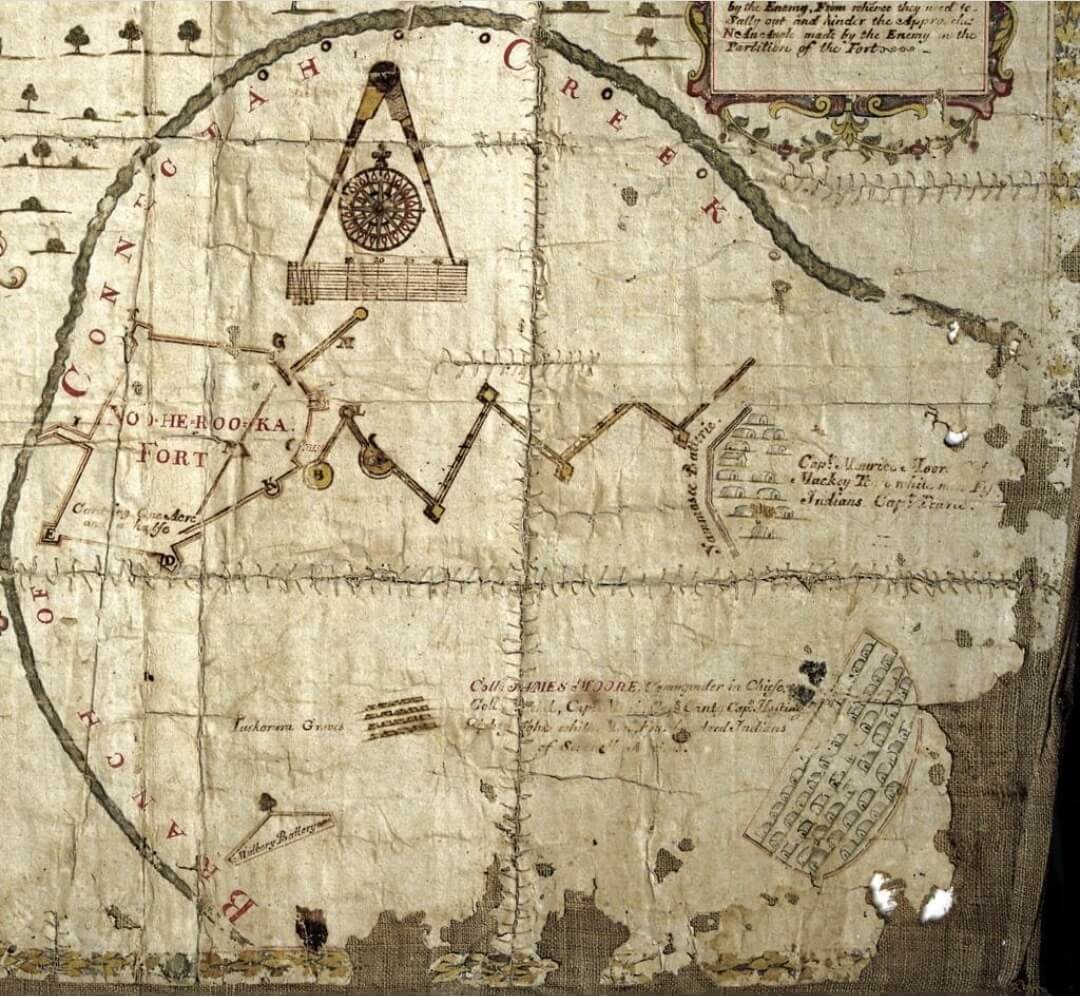
The war ended in 1713 with one of the worst massacres in the history of the eastern United States, at a Tuscarora stronghold called Fort Neyuherú·kę’ (pronounced roughly "nay-yoo-HAY-roo-kenh") near present-day Snow Hill. Around 950 Tuscarora men, women, and children were burned alive inside the fort. Another 400 were taken to South Carolina as slaves. Most people in North Carolina have never heard of it.
Some survivors eventually made their way north to New York, where the Tuscarora were adopted in 1722 as the sixth nation of the Haudenosaunee Confederacy. The Haudenosaunee, also known as the Iroquois or the Six Nations, were a powerful alliance of Indigenous nations across the Northeast, and being adopted into the Confederacy gave the Tuscarora political protection and a recognized place among the most influential Indigenous governments in North America. Those who stayed in North Carolina were confined to a reservation, then slowly pushed off that too.
In 2013, on the 300th anniversary of the massacre, Tuscaroras from North Carolina and New York gathered to mourn together. North Carolina declared the site a historic landmark that year, and a monument now stands near where the fort once was.
The Long Attempt to Erase Them
After the war, what happened to the Tuscarora wasn’t just losing land. It was a sustained effort to erase them as a people entirely. North Carolina started listing Native people on the census as “Free Persons of Color” in 1790, a move designed to muddy any future land claims. By 1835, the state constitution had been amended to strip Indians of the right to vote, own firearms, or testify against a white person in court.
Then in 1885, a state representative named Hamilton McMillan renamed them “Croatan Indians” without their consent, a name they had never used for themselves. He later admitted this under oath in court. More names followed over the decades: Cherokee Indians of Robeson County, then Lumbee. Each new name made it harder for the Tuscarora to be recognized as who they actually are. That fight for recognition is still going on today.
What They’ve Held Onto
Here’s what I find remarkable: given all of that, the Tuscarora Nation of North Carolina is still here, and they are actively rebuilding.
The Tuscarora language nearly vanished. Today it’s being taught in formal classes, families are learning it together, and in June 2023, the first ceremony officiated entirely in the Tuscarora language took place. In May 2025, a PBS video was released with narration entirely in Tuscarora by a Prospect Longhouse member. The language is coming back.
In April 2023, Tuscarora dancers came to Raleigh’s Earth Day celebration and performed on the land of Ka’téhra’θ, their ancestral village. The Tuscarora Historical & Preservation Society was formally founded in May 2025, focused on cultural revival, language preservation, and education. Three centuries of pressure and they are still here, still teaching their children who they are.
Why I Think About This in My Work
Health and community are not separate things. We know from research that historical trauma, the loss of cultural identity, and chronic dispossession show up in the body. Cortisol levels, immune function, cardiovascular health, mental health outcomes. Communities carry what has been done to them, not just individuals.
And we know the flip side is true too. Cultural continuity, a sense of belonging, connection to something larger than yourself, these are among the strongest predictors of long-term health we have. The Tuscarora’s work of revival is, among everything else it is, a profound act of healing.
I built this practice around the idea that caring for someone means seeing the whole person. Part of that, for me, is understanding the ground we stand on and the people who were here before us. The Tuscarora Nation of North Carolina is still here. Still fighting. Still coming home to Raleigh.
Staywell Health acknowledges that we practice on the ancestral territory of the Tuscarora Nation. We offer this with respect for their history, their sovereignty, and the work of revival being carried out by the Tuscarora Nation of North Carolina today.
The history in this post comes from the Tuscarora Nation of North Carolina’s own documented record, available at tuscaroranationnc.com.