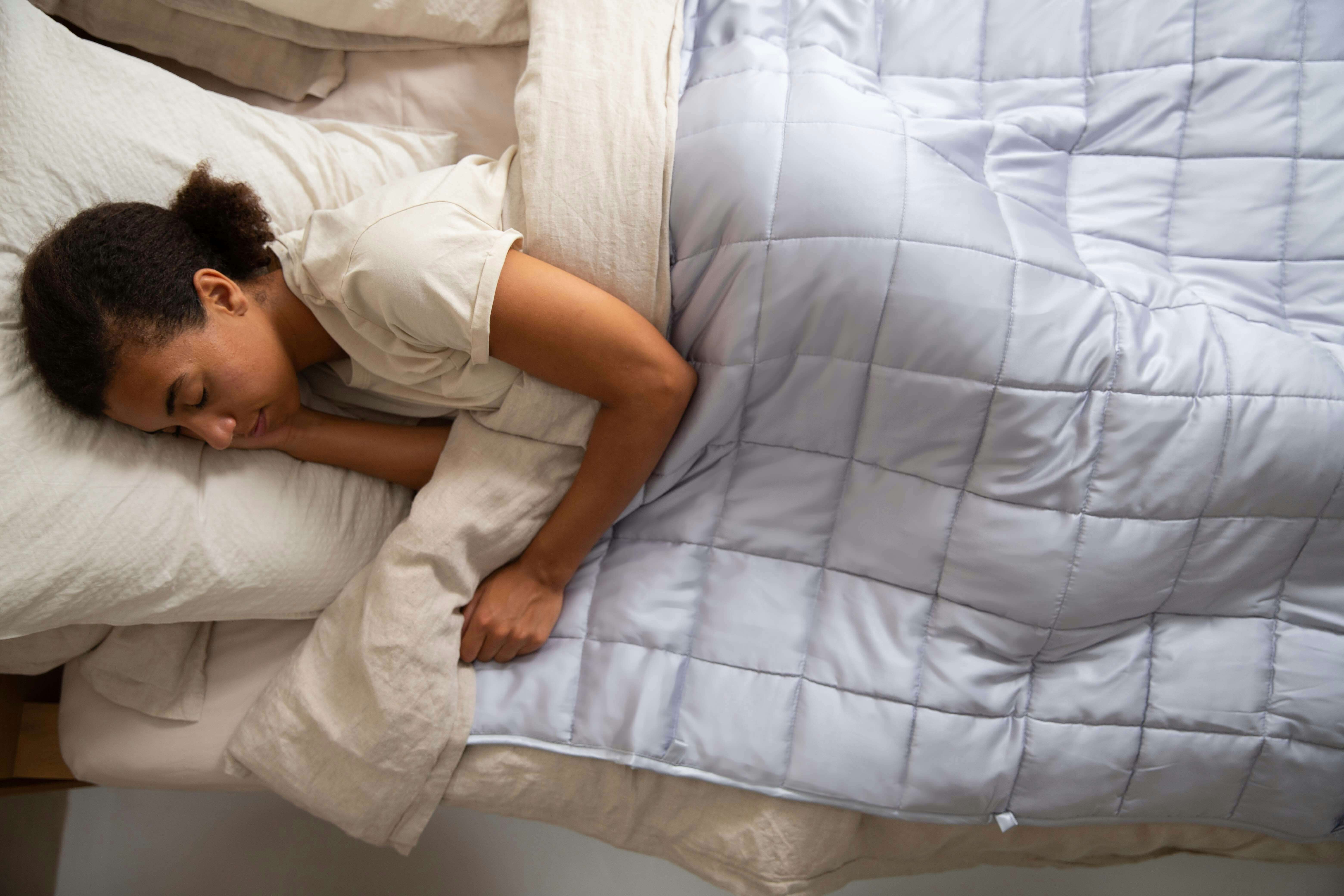
Sleep is one of those things everyone knows they should probably get more of, and almost nobody actually prioritizes. We treat it like a luxury, something to catch up on when life slows down, which it never does. So we just keep running on five or six hours and a lot of caffeine and tell ourselves it's fine.
It's not really fine though. And I don't say that to be dramatic. I say it because poor sleep is one of the most underappreciated drivers of the health problems I see in practice: weight that won't budge, mood that's hard to stabilize, hormones that are off, energy that's just... not there. A lot of that traces back to sleep, and a lot of people have never had anyone connect those dots for them.
So that's what this post is. Let's talk about what poor sleep is actually doing to your body, and what you can realistically do about it.
What Happens When You Don't Sleep Enough
Sleep is not downtime. Your body is genuinely busy while you're asleep: repairing tissue, consolidating memory, regulating hormones, clearing metabolic waste from the brain, and resetting your nervous system for the next day. When you cut that short night after night, all of that gets disrupted.
The effects are not subtle, and how much sleep you actually need is individual. Some people genuinely do great on six hours. Others need eight or nine to function well. The number matters less than whether you're waking up feeling rested, maintaining your energy through the day, and not relying on caffeine just to get to noon. When sleep is consistently insufficient for your body, you'll usually see measurable changes in blood sugar regulation, inflammatory markers, immune function, and cognitive performance. Most people just attribute those changes to being busy or getting older, when sleep is often a big part of the story.
Sleep and Your Weight
This one surprises people. If you've been eating well and exercising and the scale still isn't moving, sleep is one of the first things I want to ask about.
Here's what's happening: poor sleep disrupts two hormones that regulate hunger, ghrelin and leptin. Ghrelin is the one that makes you feel hungry. Leptin is the one that tells you you're full. When you're sleep deprived, ghrelin goes up and leptin goes down. So you're hungrier, your fullness signals are blunted, and you're more likely to reach for high-calorie, high-carb foods because your brain is looking for quick energy.
On top of that, sleep deprivation raises cortisol, which promotes fat storage, particularly around the midsection. And it affects insulin sensitivity, making it harder for your body to process carbohydrates efficiently. None of this is a character flaw. It's physiology. But it does mean that if sleep is not in the picture, the rest of your health efforts are working uphill.
Sleep and Mental Health
The relationship between sleep and mental health runs in both directions. Poor sleep makes anxiety and depression worse. Anxiety and depression make sleep harder. It can become a pretty rough cycle.
What's less talked about is how much sleep affects emotional regulation even in people who don't have a diagnosed mental health condition. When you're sleep deprived, your amygdala, the part of the brain that processes threat and emotion, becomes more reactive. You're more irritable, more easily overwhelmed, less able to think through problems calmly. A lot of people chalk that up to stress when sleep is actually a significant piece of it.
Getting consistent, quality sleep is genuinely one of the most effective things you can do for your mental health. It's not the whole picture, but it's a real and often underutilized part of it.
Sleep and Your Hormones
This is one I bring up a lot with patients, especially when they're dealing with fatigue, low libido, or mood issues that don't have a clear explanation.
Most of your body's hormone regulation happens during sleep. Testosterone, for example, is primarily produced during deep sleep. If you're consistently getting poor or insufficient sleep, your testosterone levels will reflect that, even if everything else looks fine. Growth hormone, which plays a role in muscle repair, fat metabolism, and cellular recovery, is also largely released during deep sleep stages.
Cortisol follows a natural rhythm that's heavily tied to your sleep-wake cycle. Chronic sleep deprivation keeps cortisol elevated at times when it should be low, which affects everything from your immune response to your thyroid function to your mood. If your hormones feel off and your sleep has been rough, that's not a coincidence.
If you've had your hormones checked and the results were surprising or confusing, it's worth asking whether your sleep was in a good place at the time. It genuinely affects the numbers.
Your Light Environment Matters More Than You Think
This one does not get talked about enough. We evolved over thousands of years with a very specific light pattern: bright, full-spectrum sunlight during the day, and the warm orange-red glow of fire at night. That firelight, candles, oil lamps, a sunset, all of it emits light in the warmer, lower-frequency end of the spectrum, which does not suppress melatonin the way blue light does. Your brain is literally wired to start winding down in that kind of light.
Then we invented LEDs and put them everywhere. Modern LED bulbs and screens emit a lot of blue and cool-white light, which your brain interprets as daytime. So even if it's 10pm and you're sitting in a room full of bright overhead LEDs scrolling your phone, your brain is getting signals that it's the middle of the afternoon. Melatonin stays suppressed, cortisol stays up, and sleep onset gets delayed.
The fix doesn't have to be dramatic. Getting bright natural light in the morning helps anchor your circadian rhythm. Switching to warmer, dimmer light in the evenings, lamps instead of overhead lights, warmer bulb tones, even candlelight, gives your brain the signal it's looking for. If you can find incandescent bulbs, those emit a much warmer, more natural light than LEDs and are worth using in evening spaces. They're getting harder to find and they do use more energy, but for a bedroom lamp or a living room light you use in the hours before bed, the tradeoff can be worth it. Some people go as far as using oil lamps in the evening, and while that can make a real difference, it does come with obvious fire safety considerations, so that's a personal call.
If you're not ready to overhaul your lighting, a simpler option is amber or orange-tinted blue light blocking glasses worn in the evening. These filter out the blue wavelengths from your screens and lights without requiring you to sit in the dark. Red-tinted lenses block even more of the spectrum (both blue and green light) and may be more effective for people who are particularly sensitive, though they do distort color more. Either way, wearing them an hour or two before bed can make a meaningful difference in how easily you fall asleep.
So What Can You Actually Do About It
Good news: sleep is one of the areas of health where relatively small, consistent changes can make a pretty noticeable difference. Here's what actually moves the needle.
Keep a consistent sleep schedule. Going to bed and waking up at the same time every day, including weekends, is probably the single most impactful thing you can do. Your body runs on a circadian rhythm and it does much better with predictability.
Cool your room down. Core body temperature needs to drop slightly to initiate and maintain sleep. Most people sleep better in a cooler room, somewhere in the 65 to 68 degree range. It sounds minor but it makes a real difference.
Watch the alcohol. A lot of people use alcohol to wind down, and it does help you fall asleep faster. The problem is it significantly disrupts sleep quality in the second half of the night, reducing REM sleep and causing more fragmented, less restorative sleep overall. You might clock eight hours and still wake up feeling rough.
Be careful with late caffeine. Caffeine has a half-life of about five to seven hours, meaning if you have a coffee at 3pm, half of that caffeine is still in your system at 8 or 9pm. For people who are sensitive to it, even afternoon caffeine can meaningfully affect sleep quality.
A word on melatonin: it's marketed as a harmless sleep aid, but it's actually a hormone and a potent antioxidant, and taking it casually or in high doses can backfire. Over time, supplementing melatonin can suppress your body's own natural production, which can make sleep problems worse in the long run. If you're considering melatonin, I'd encourage you to talk to a provider who actually understands how it works before reaching for it regularly. It's not the same as taking a vitamin.
When to Actually Talk to Someone About It
If you've tried the basics and you're still not sleeping well, or if you're waking up exhausted no matter how many hours you get, it's worth a conversation with a provider. There are a few things worth ruling out: thyroid issues, iron deficiency, cortisol dysregulation, and sleep apnea are all common and treatable contributors to poor sleep that often go undiagnosed.
Sleep apnea in particular is significantly underdiagnosed. It's not just a snoring problem. It disrupts your sleep architecture throughout the night and has real downstream effects on blood pressure, cardiovascular health, blood sugar, and cognitive function. If you or someone you sleep with has noticed significant snoring, gasping, or you're waking up with headaches or feeling unrefreshed, that's worth bringing up.
At Staywell, sleep is something I actually have time to dig into with you. We can look at what's going on, check labs if relevant, and put together a real plan rather than just telling you to go to bed earlier.